03 Mar 2009: Source of Vulnerabilities
From time to time I publish metrics on vulnerabilities that affect Red Hat Enterprise Linux. One of the more interesting metrics looks at how far in advance we know about the vulnerabilities we fix, and from where we get that information. This post is abstracted from the upcoming "4 years of Enterprise Linux 4" risk report
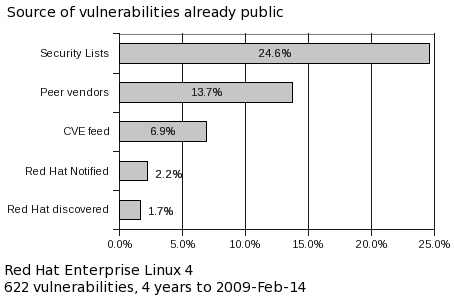
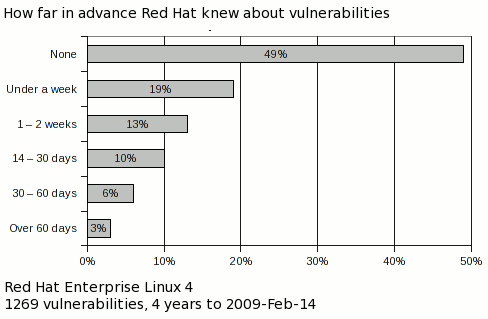
For every fixed vulnerability across every package and every severity in Enterprise Linux 4 AS in the first 4 years of its life, we determined if the flaw was something we knew about a day or more in advance of it being publicly disclosed, and how we found out about the flaw.

For vulnerabilities which are already public when we first hear about them we still track the source as it's a useful internal indicator on where the security response team should focus their efforts.
So from this data, Red Hat knew about 51% of the security vulnerabilities that we fixed at least a day in advance of them being publicly disclosed. For those issues, the average notice was 21 calendar days, although the median was much lower, with half the private issues having advance notice of 9 days or less.
Created: 03 Mar 2009
Tagged as: metrics, redhat, security